Allison Mei-Li is a writer based in Southern California. Her poems have appeared in anthologies, podcasts, and journals such as Rust & Moth, Coffee + Crumbs, MER Literary, Voicemail Poems, Ink & Marrow, wildscape, and others. A finalist for poetry prizes by The Alpine Fellowship and Central Avenue, she writes about motherhood, identity, and the stories our bodies hold. Allison co-hosts poetry sound baths and creative workshops for women.
Allison: “I had it in my head that I wanted to be in control of every creative decision of the book. I designed the cover and the interior, and taught myself Adobe InDesign. I had heard that you have more nuance in Adobe InDesign instead of Word. It was a huge undertaking. I think I designed a hundred different covers, and I’m really happy with the way it turned out. I think it was worth all of the effort, but I did have to teach myself a lot.”
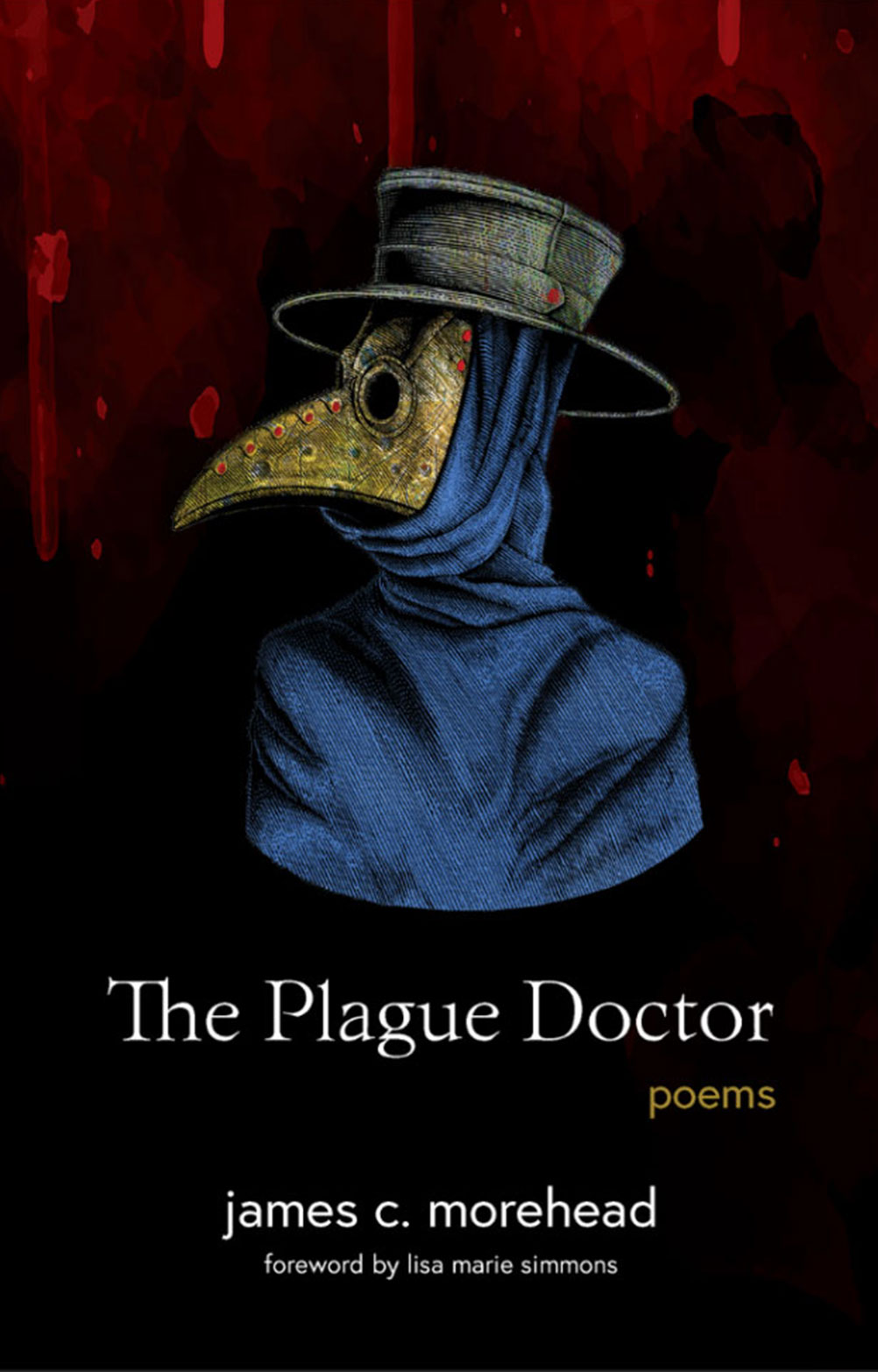
James: I can totally relate to that, because for my most recent book, The Plague Doctor, I had a publisher that wanted to run with it. I was about to sign the contract, and then I decided I wanted total control over everything. The visual design was such an important element of the book that I just didn’t want to have to argue over that. At that point, I had already learned Adobe InDesign. But wow, that’s a learning cliff.
Allison: “It really is. Same thing with me. I actually never even sent it out on submission specifically because I wondered what would happen if I didn’t agree with their creative choices. At the time, I wondered why anybody would give that control over. It seemed like such a better option to do it yourself, but now on the other side of things, I can see why. Yes, because it is more work.”


James: You have to be prepared to take on a ton of work, but your book looks beautiful. It looks professional because you put the time in and you used the tools. Chef’s kiss on the font choice!
“A History of Holding” starts with “Elbow Deep,” a beautiful poem about your son. You wrote:
I barely hear her, though.
I'm elbow-deep
in showing my son
the heart of it all:
the muck, the rot,
the raw promise
of something beautiful.
A few poems later you begin a series of poems about your family’s painful struggle with fertility. Those poems are powerful and moving, and I’ll ask about them later; for now, what was your thought process for starting with an outcome of overcoming those challenges?
Allison: “That was a decision I made because I realized if I started chronologically, it would be a really heavy start to the book, and I didn’t like that idea. I also feel like parenthood, and motherhood in general, you never really stay in one emotional plane for too long. There’s a lot of ebb and flow, a lot of movement.
“I wanted the book to mirror that. I didn’t want it to be really neat and tidy from point A to point B, but to move back and forth in memory and time. Each section of the book takes place in a certain time period. It’s not like the poems are all over the place necessarily, but the sections move back and forth in time.”
James: Your series of “[SEARCH HISTORY]” poems are an innovative form of found poetry where you are finding phrases from your own in-the-moment searches (real or imagined). In the first of these poems you wrote:
internal bleeding after cyst removal
7 transfusions = how much blood loss?
losing 40% of your body's blood
recovering from a near-death experience
How did you approach this interesting take on found poetry?
Allison: “Originally, I showed my first draft to a mentor named Kelly Grace Thomas. She noticed that I was alluding to this whole backstory of what happened to me, but that I never really told the reader what happened. She said, ‘I think you need to make a decision to either tell this story or not tell this story. It’s up to you, and you don’t have to include this in the book, but I think the reader will be confused if you just mention little things here and there and don’t really show what happened.’
“I was on the fence for a while as to whether I wanted to include that story or not. I really wanted the people reading the book to see themselves in the poems, and I worried that if I gave too much of my own story, I might be taking that away. But then I thought about all of the poetry books that I love, and they’re all very specific and talk about the speaker’s history. I decided I wanted to do this, but I struggled with how to share it.
“I think the poet-reader relationship is really important, and I wanted to share this with the reader in a way that was digestible and still authentic. I had actually written a search history poem in the past, and at the time that I wrote it, it was because I was taking a hermit crab essay workshop. Do you know what that is?”
James: No, but that sounds really cool.
Allison: “A hermit crab essay is basically when you use another form to tell the story. Instead of just an essay, you tuck it into a form that does a lot of the heavy lifting. The instructor in the workshop said a hermit crab essay is really good for hard or sensitive stories because there’s this shell that protects you and the reader, so you’re not just spilling your guts.
“I went back to that, and it was about the traumatic medical experience, but I wanted to extend it beyond what happened after the medical experience, too. I rewrote it for the book, and it was really long—pages and pages. When I went to format it for a 6×9 book, I realized it was going to span quite a few pages. At the same time, I was struggling with the sequencing of the book. I knew I didn’t want to go chronologically, but I was worried because I mention a miscarriage, and then the pregnancy with my son. I thought it could get confusing and people might think I was pregnant again.
“The lightbulb moment for me was realizing that if I split up the search histories, I could really root each section in a specific time because people could see where I was mentally. Then the poems in that section would make sense, and readers would understand what was happening at the time and how the poems process that. That’s when everything clicked. I realized this was going to be a series in the book, acting as a map that tells the story.
“In terms of how I came up with the actual search terms, I didn’t go back into my history. That time is so vivid, and I searched the same things over and over again. I know exactly what I was searching. Then, of course, when I made them into a poem, I added some things that would serve the purpose of the poem.”
James: The series of poems that draw from your fertility challenges are powerful and, I expect, will resonate with many women who have experienced similar challenges. How did you approach revisiting such traumatic moments in your life and finding the poetry while doing so?
Allison: “I wrote the poems first, then I used the search history to fill in what would be helpful to know. I had a lot of poems, and I’m sure as you can relate to, you don’t include all of the poems when you put them in a book. You’re trying to decide—partly based on which ones are your favorites, but also what is really moving the collection. So I started with the poems first, and then I used the search history to give that foundation.”
James: While you write primarily in free verse, your poetry isn’t without form. How do you approach both the initial writing and then editing and revision to create a poem that works both as something to be recited and heard, and to be read on the page?
Allison: “I’m trying to think if the form comes first or the poem. There’s a poem in the book that’s like a contract, and for that one, the form definitely came first. I thought it would be really fun. Actually, now that I’m saying it, I think when I write, a lot of times I do know if I want to use a special form. I typically choose a special form when I know what I’m going to write about and I feel like it would serve the subject.
“There’s also ‘No One’s Mother,’ and it has a lot of white space in it. With that one, I was thinking the speaker has a melancholy vibe, and you would want to read it the way it’s laid out on the page. I do think about how it will be read, and I use white space to give more pause and create moments.
“There’s also one that moves like a snake on the page—it’s called ‘Nocturnal.’ It had so many names, which is why I tried on so many titles for it. I wanted this slithering, creepy feeling because it’s about how much a mother worries in the middle of the night, and that there’s this lurking thing underneath the surface.”
James: Sometimes a form just presents itself; that’s so cool. I had one where I ended up writing two poems—one that didn’t work, and one that did, where I put it in the form of a screenplay as a prose poem. The initial poem didn’t work, and my younger daughter pointed that out and said, ‘Hey, that poem doesn’t work, but what you’re doing is cool; find a different poem for that approach.’
Allison: “Okay, so you chose a different poem but put it back into the form.”
James: Yeah, the poem that I initially put in that form wasn’t working; it was very lyrical and rhyming. I took another poem and put it into this screenplay format as a prose poem, and then it worked really well. “Normandy in Nine Scenes” was about a visit to the Normandy D-Day beaches, and the form just made it work so much better. I owe my younger daughter for that one! If you find a form that’s really cool but the poem isn’t working, keep the form and find a new poem for that context.
Ending poems can be tricky; it’s tempting to write past the ending. Your poems have effective endings that are openings. An example ending from “Everything, Even a Shadow”:
So maybe I shouldn't tell him
that my hands will never change

when every day,
they learn the shape
of letting go.
What’s your approach to editing the endings of your poems?
Allison: “For me, it’s just intuitive. I start a poem, and I usually don’t know where I’m going with it. I don’t have an end in mind; I’m just going for it. I’m just writing, and then I feel like I figure it out. Sometimes it almost feels like solving a math problem. I reach a point, and I realize, ‘Oh, that’s what this poem is about.’ A lot of times, I don’t realize what the poem is about until I hit that part, and then I realize this is the ending.
“Someone pointed out recently that my endings are kind of the heart of the poem. I don’t do that intentionally, but I guess that’s part of my writing process. When I hit the heart, I know it’s done.
“It’s funny you brought up this poem in particular because it’s one that I set down and restarted a lot. I loved the moment where my son talked about my hands still growing, and I thought, ‘No, they won’t.’ I knew there was something there, but I never figured out what it was really about or how I wanted to land it. I just kept setting it down, and eventually, I came back to it. I wrote that ending and realized, ‘Oh my gosh, this is what it’s about.’ It’s funny that’s the one you brought up, because that ending didn’t come for a while.”
James: I think that’s important for poets who are just starting out to understand: you don’t have to know where you’re going. You just have to start writing. Once in a blue moon, you’ll have a poem just fall out of you. I’ve had it happen twice; I can remember each poem. It just fell out of me and didn’t require much revision, but that’s two out of hundreds of poems that I’ve written. You have to just start writing, and that is really hard. Just start writing, knowing that you’re probably going to throw away whatever you’re writing at first.
I try to think about it like going on a long hike. I’ve hiked Half Dome a couple of times, and when you start a ten-hour hike, for the first thirty minutes, you just have to start going. You have to warm up, and it’s not a lot of fun because your body isn’t fully warmed up yet. It’s the same thing with your mind. You just have to start writing, and then your mind warms up and you get into it.
Allison: “It’s too much pressure. If every time you sit down, you say, ‘This has to become a poem that I’m going to publish,’ that’s very intimidating.”
James: We spoke a little bit about your path to publishing, which I have total respect for—for those who put in the work to self-publish with the quality of a traditionally published book. When did you have the confidence that your collection of poems would work as a book, and how did you approach the path to publishing, including placing individual poems along the way?
Allison: “Partly, I think I tricked myself into it. Let me rewind a minute: I never shared my poetry until a couple of years ago. I’ve been writing poetry since I was a kid, but something held me back from sharing it. A couple of years ago, I just decided life is too short, I’m getting older, and I feel more comfortable with being seen.
“At the time, I was reading a lot of poetry, especially on motherhood, and I realized how important that was because it really made me feel seen and known in what I was going through. I saw what that could do for others. I was also writing tons of motherhood poems because I’m in the thick of it, and you write what you know and what you’re going through. When I started sharing my work, people told me, ‘You should put these into a book.’ I thought, ‘You say that like it’s easy!’ That’s a huge undertaking. But I realized it actually has been a dream of mine ever since I was little.
“I decided I wanted to do this, and I say that I tricked myself into it because I decided I was going to do a chapbook, which is around fifteen poems and feels much more manageable. I knew I wanted it to be really focused and thematic, so it could just be about motherhood without needing a whole backstory. I started putting together a chapbook, and it was ten poems, and then it was twenty poems. I didn’t know how to cut it down to just fifteen and still say what I needed to say.
“As I kept trying to cut it down, I realized that maybe this actually wanted to be a full collection, with a backstory and a present story. At that point, I decided to go all in on the full book. Once it’s a full book, most poets like to have an arc, some movement, and a story, which becomes a little bit more complicated than just putting fifteen poems into a chapbook. That’s where I spent a lot of time; I had to add poems to make it what I wanted it to be.”
James: As a dad of two (now fully grown) children, I found your poems extraordinarily moving, and they provided me with a unique perspective on the many joys and challenges of motherhood. What have you learned from your early readers and audience members, especially women, after they experience your poetry?
Allison: “They’ll send me a message or an email and tell me what their favorite poem was, and a lot of times it’s not consistent. That’s really fun because when you post a poem on Instagram, it’s very clear which ones resonate with people versus the ones that don’t perform as well. It’s been fun to see how different poems touch different people, and I think that’s what’s really special about a collection.
“It’s been really affirming to me that people do call out the postpartum anxiety poems and the ones I was a little bit more on the fence about including. I worried that maybe no one would relate to the poems that are really specific and rooted in my story, but a lot of people do. Even if it’s not the exact same thing they went through, the feelings are the same. That’s been really cool to hear.”
James: One more question before I turn the mic over to you: you have some terrific titles in this collection. A couple of examples: “Texts I almost send my son before I remember he doesn’t have a phone” and “The world has not been cruel to him yet.” How do you approach crafting titles for your poems?
Allison: “Titles are not intuitive for me the way that endings are. I used to not really care about the title, but as I went through a lot of workshops and trainings, I discovered how much weight and heavy lifting a title can do, and how it can change the tone of the poem. For example, I’m going to read one at the end called ‘Love Poem,’ but I originally titled it ‘Psycho.’ I sent it to a few beta readers, and one of them told me they loved the poem but felt ‘Psycho’ was the wrong tone; it didn’t match the sweetness of the poem. So I changed it.
“I think titles are so much fun. They can be used in an amazing way to add to the poem. I usually come up with several at a time and try them on to see what they add. Some mentors have taught me that it’s good not to just repeat a line from the poem. With my poem ‘The world has not been cruel to him yet,’ that one does repeat, but it’s a bleeding title. A bleeding title is where the title is the first sentence of the poem, and the first line is a continuation.
“There are titles where you can add some humor, flip the script a little bit, or add a lot of context. Maybe the poem itself isn’t very explicit, but you can make an explicit title so the reader knows exactly what’s happening. I learned all of that in the last couple of years. Now I have a lot more ways to approach titles, and I think they are very tricky, but very fun.”
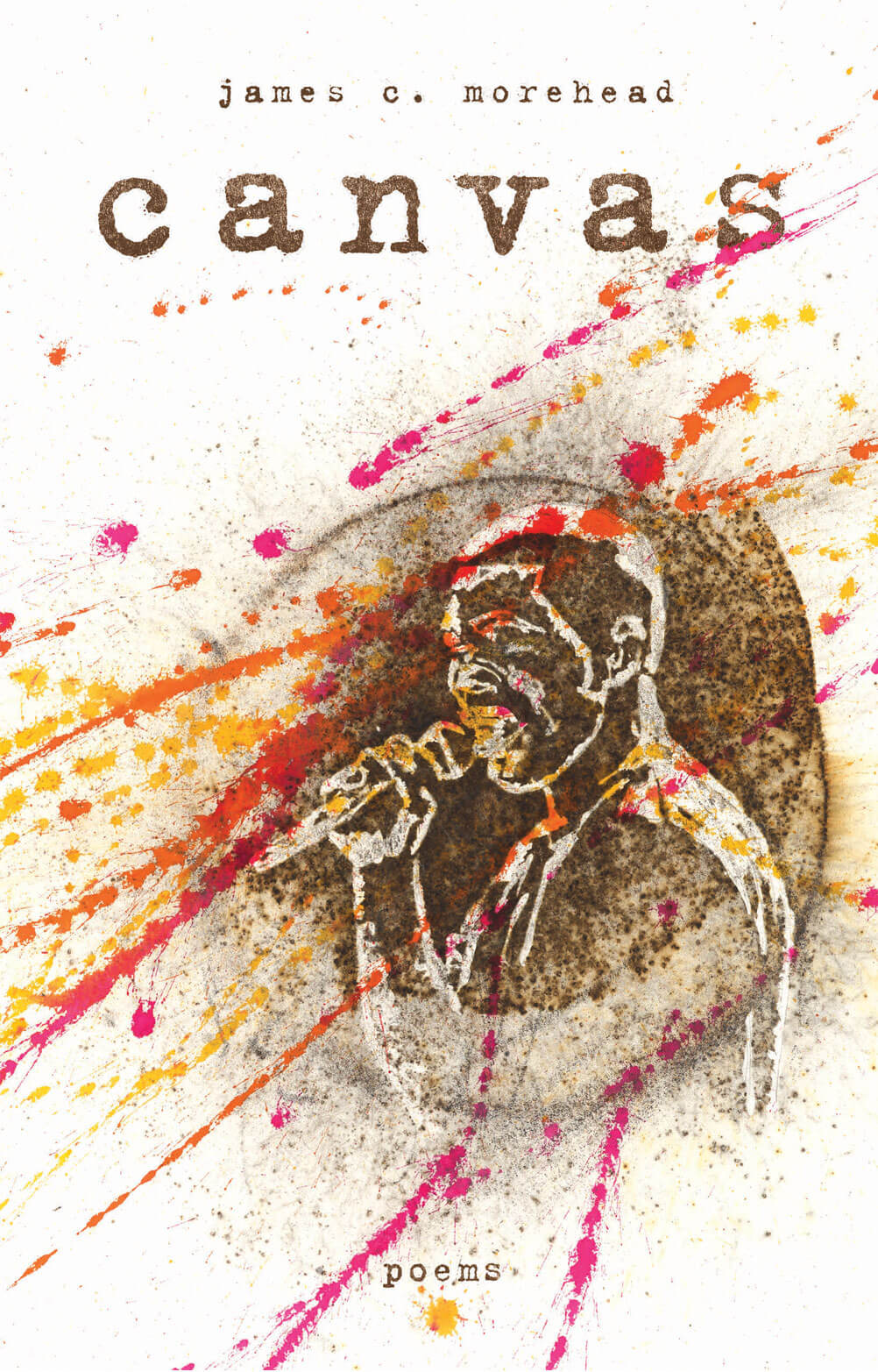
James: That’s a terrific breakdown of the different roles that titles can play. I’ll add one more. It was the very first poem I got placed years ago. Like you, I had been writing since I was a kid in tenth grade. A friend, who ended up doing the cover art for my first book back in 2020, told me I should really publish. I took that advice; it was the nudge I needed to come out of the poetry closet, if you will. I was talking to another poet friend about my work, and she said, ‘I really enjoy this poem. It’s so much fun, but the title is boring.’ The poem was originally called ‘Stage Fright,’ which was functional. It was about an eighth-grade experience I had—my first chance to be on stage, and I think my last. I changed the title to ‘That Time I Was Left for Dead Downstage.’
Allison: “Oh, I love that.”
James: The poem immediately got placed. It might have been a coincidence, but I think the title definitely helps set the whole tone of the poem, which is humorous in nature, and the title really grabs you. I love the way you framed the different ways titles can work. I would add that last one as a headline for the poem. If you’re not interested in the title, you’re probably not going to read any further, so there’s a big benefit to that.

![Maria Giesbrecht on “A Little Feral”: Crafting Poems of Heritage and Healing [INTERVIEW]](https://i0.wp.com/viewlesswings.com/wp-content/uploads/2026/08/Maria-photo.jpg?fit=3265%2C4898&ssl=1)
![Mikhail Iossel Explores Identity and Breaking from the Past in “Sentence” [INTERVIEW]](https://i0.wp.com/viewlesswings.com/wp-content/uploads/2025/10/photo-iossel.jpg?fit=483%2C949&ssl=1)
![Rickey Laurentiis Reclaims Trans Identity Antecedents in “Death of the First Idea” [INTERVIEW]](https://i0.wp.com/viewlesswings.com/wp-content/uploads/2025/10/laurentiis_rickey-e1759705606462.jpg?fit=307%2C410&ssl=1)
0 Comments