Maria Giesbrecht is a Canadian poet whose writings explore her Mexican and Mennonite roots. Her work has previously been published in Contemporary Verse 2, Talon Review, and is forthcoming in Queen’s Quarterly. She is the runner-up for the 2022 Eden Mills Poetry Contest and a graduate of the post-graduate Creative Writing program at Humber College. Maria is the founder and host of the writing table, Gather, and spends her days nurturing creative folks to write urgently and unafraid.
Below are excerpts from the interview with James Morehead on the Viewless Wings Poetry Podcast.
James: In your poem, “I used to be a little kid” you write,
my eye doctor was a smart lady and on my annual
visit at age 10
she asked me how much i read every day and i said "one”
"chapter?”
"no, book”
What’s your earliest memory of falling in love with poetry and what attracts you to the form?


Maria: “It’s so special to me. That poem is a true story. I used to read one Nancy Drew book a night. My mom will tell you that I had a little reading nook in the kitchen by the window where the light was nice. I would come home from school with my library book—always Nancy Drew—and I would just finish it in one night. The eye doctor thought that was bad for my eye health, but I didn’t stop, obviously.
“I’ve always loved words, but poetry didn’t come to me until around grade 8. My grade 8 science teacher, strangely enough, was a rapper, and he introduced me to spoken word and rap. That was my first introduction to that world.
“But yeah, I’ve always been obsessed with the idea of creating different realities and being able to read them in a book. I think that still feels totally magical to me.”
James: “peeling oranges” is primarily free verse, all lower case, with limited punctuation. My first book was similar, and it’s how I first wrote poetry. While I’ve since incorporated received forms, capitalization, and punctuation into my repertoire, I still enjoy the aesthetic of all lower case. What attracts you to that style of poetry?
Maria: “It’s so interesting because I wrote peeling oranges and published it two years ago, but I probably started writing it four years ago. It very much was, as you said, a feeling of freedom—being free from form, free from punctuation, just creating whatever I wanted.
“I don’t resonate with that form as much anymore. The book I have out on submission right now is very different from peeling oranges. But I think it’s important for every poet to experience that sort of introduction to poetry. I didn’t read a lot of other poetry during that time; I just developed my own voice. Looking back, I’m glad that happened because I broke all the rules first, and then found there’s a lot of value in some of these rules.
“The poetry I write now is more literary. I use capitalization, punctuation—that sort of thing. To be 100% honest, if I read back some of the poems now, I love them because they had their time and place, but I look back and think, ‘Oh, I would definitely change a lot of things.’ And I think I’m not alone in that; I think poets typically look back on their early work and wonder, ‘What was I thinking?’
“But I have a special place in my heart for the Maria who wrote at that time because she was just so unhinged—she just didn’t care. I can appreciate that.”
James: I can relate to that because I also went through high school doing a lot of English and loving it, but then I went to university for an engineering degree and now work in the tech industry. So, my initial poetry wasn’t strongly influenced by formal literary teaching. Early on, that allowed me to be free, but now I’m really hungry for all the things I’m building up—an MFA informally along the way. Although I’ve thought about going back and doing an MFA later in life. I can really relate to that idea of starting without being constrained by rules because then you just write, and there’s plenty of opportunity to see how the rules can actually be a tool.
Many of your poems are short with clever turns. One example from “peeling oranges” is:
I saw him dead

between the
pages of my notebook so
i wrote until he
was breathing
You also have a very active and engaged Instagram following. How has the popularity of short form poetry that works for social media influenced your approach?
Maria: “I see other poets in the community all the time, and I think micro poems have sort of gotten the short end of the stick because I do believe a short poem can be very powerful and captivating, especially if it has an image to go along with it that just screams truth and veracity. But I tend to stay away from those overly relatable platitudes. If my short poems are going to be short, they’re going to pack a punch—they’re going to have a great image.
“Sometimes, people think that to gain a following on Instagram or to get a larger platform, they need to be relatable to everyone, and I think that’s unfortunate. I don’t connect with vague, short poems that don’t have the image behind them to back them up. I think when we actually get vulnerable and write from that place, it’s more relatable. Yes, I think short-form poetry does better on Instagram because our attention spans are shorter on social media platforms, but that’s not to say I haven’t had longer pieces connect with a lot of people.
“I personally just write what I want to write, and I would give that advice to others looking to connect with more people on Instagram, Twitter, or other social media platforms. If you write from your heart with truth and honesty, and you really work at your craft to get your poems where you want them to be, that will connect with your audience. I don’t think it necessarily has to be just short-form poetry. That’s my TED Talk on that.”
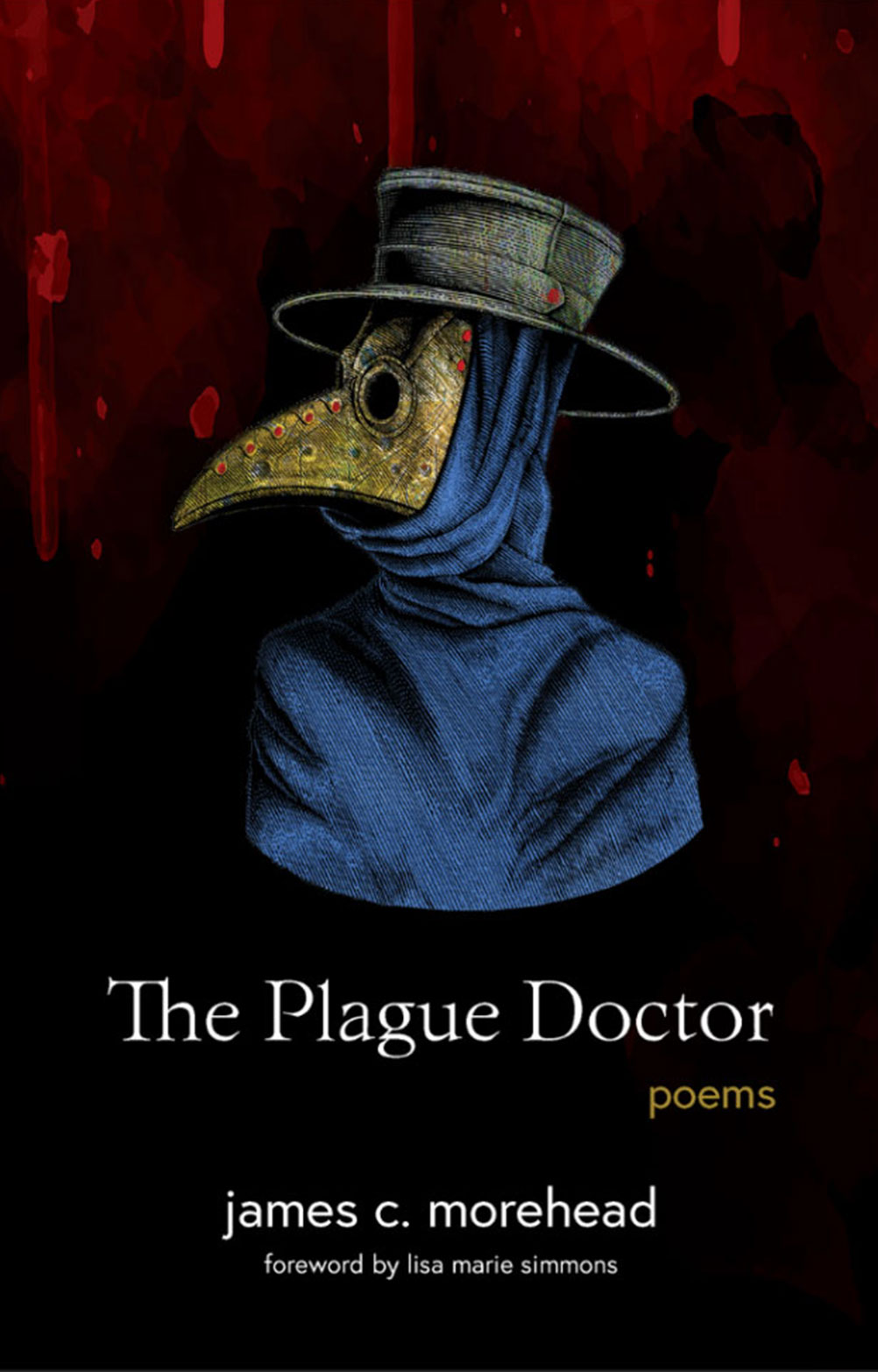
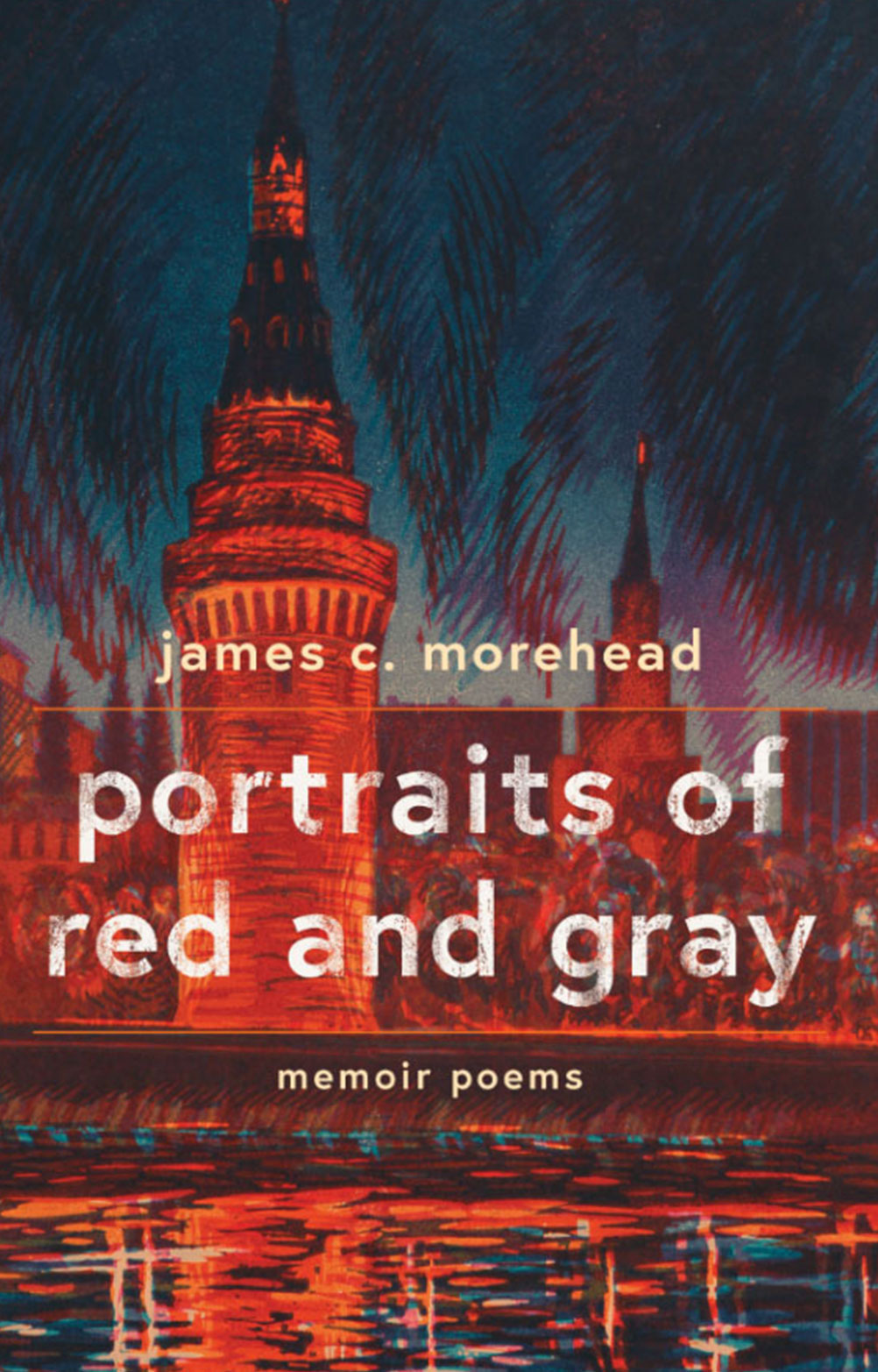
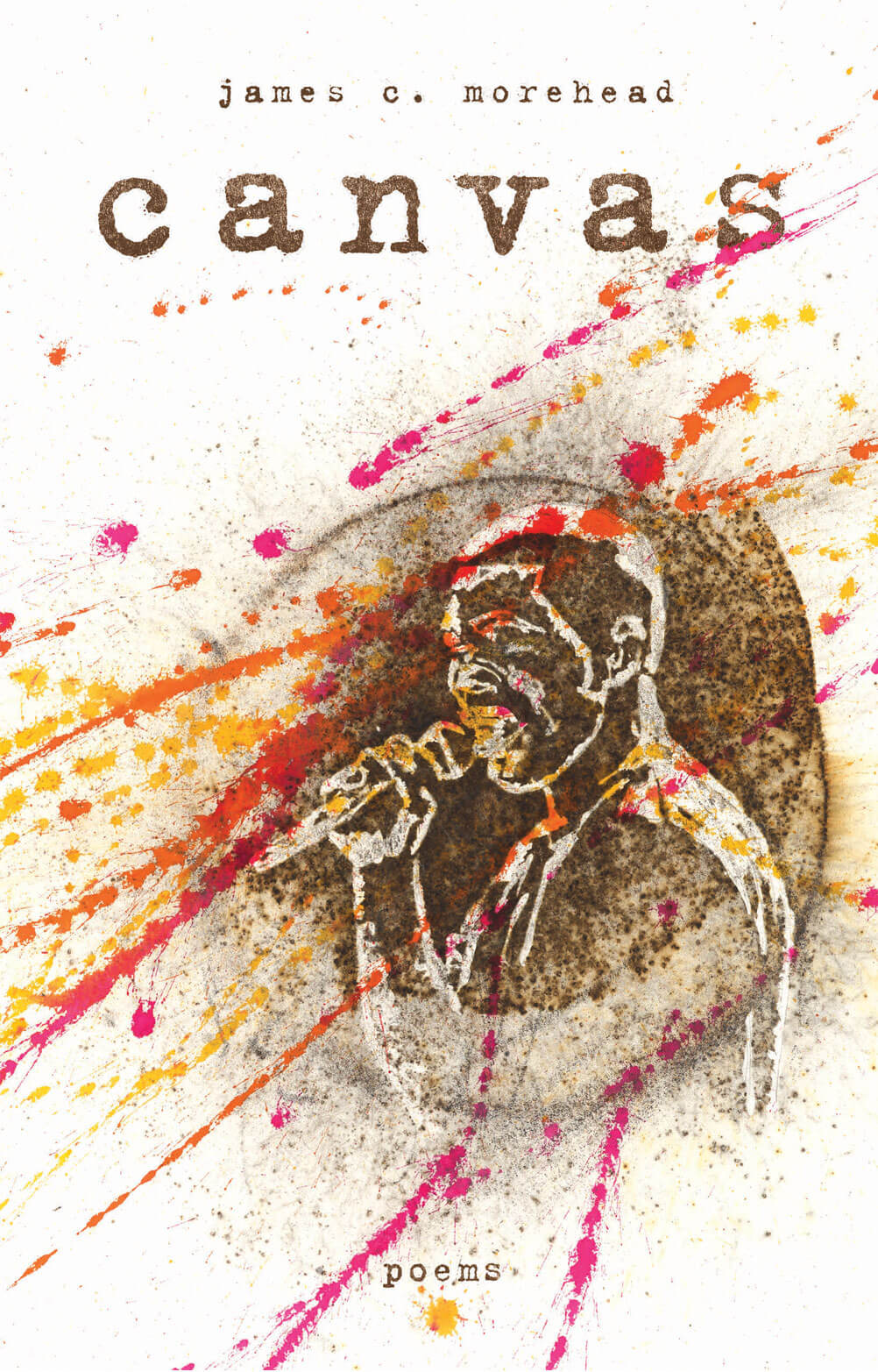
James: I think you raise a good point there—that you should write your poetry focusing on the poem, and after the fact, figure out what audience resonates with it, then find ways to connect with that audience. My first two books were very memoir-like, drawing a lot from my history, but my third book, *The Plague Doctor,* is very different—it’s eerie and creepy, and it has a totally different audience. I’m learning that as I see reviews and notice who connects with it. I think you have to understand what audience your book resonates with after the fact and not try to write your poetry for a specific audience, or you’re going to constrain yourself in a pretty artificial way.
Maria: “Yeah, because I think too, maybe your piece would be better suited to, let’s say, Instagram or another platform. You do have to know your audience, but you’re totally right—figure that out after you write the poem, not during. It’s hard to be authentic and let the poem say what it wants to say when we’re already thinking about who’s going to read it beforehand.”
James: In addition to writing and publishing poetry, you’ve created a small business built around poetry, including Gather and Retreats. Talk about what you’ve created and what people can expect from the services you offer.
Maria: “I actually don’t really love the term ‘small business’ because I come from a corporate accounting background, and I think I have Corporate America PTSD—or maybe Corporate Canada PTSD. My main focus is running a writing community. I host a writing table called *Gather*, and every Sunday morning, we get together, write, and then share our work. We also have an online portal where we post our poems, give feedback to each other, and just support one another. It’s basically what I would have wanted five years ago when I started writing poetry. That’s the mindset I’ve always had when creating these things—whether I’m making educational videos on poetry theory, gathering with poets on Sunday mornings, or hosting a retreat. I always think, ‘What would I have needed? What would I have wanted five years ago when I was just starting out?’
“Gather is the bread and butter of it all. We are, in my humble opinion, the coolest poets to exist. Everyone is so lovely, and I feel honestly humbled and blessed that I get to host this and think of cool ideas to discuss on Sunday mornings. For example, our upcoming Sunday morning Gather will explore nonsense in poetry and the idea that there’s a time and place for writing nonsensical poetry. That’s the kind of thing we delve into—a playground where people can come and go as they please. It’s drop-in, pop-in, very accessible, but still focused. I believe community is not only for support but also for critique. We are dedicated to improving our craft, making our poems the best they can be. That’s kind of my ‘small business,’ but it doesn’t feel like a business—it just feels like fun.”
James: I definitely don’t view ‘small business’ in a derogatory way. I think it’s amazing to create something you love, find a way to attach value to it, and own and control the whole thing. So, yes, I use ‘small business’ in a very positive way, and I will definitely be a member of Gather in the future. One thing that appeals to me is that I was part of a critique group outside of work, but it was during the workday, which made it extremely hard for me to attend regularly. I eventually had to drop out, which was unfortunate because I found it so valuable. I think you can write the occasional terrific poem by yourself, but to consistently write great poetry, you need some sort of feedback loop. There are some amazing poets who had no feedback loop at all, but they are the exception, I think. What you’re doing with Gather is so cool, and it’s definitely on my list to become a member. It’s a service worth paying for, and I think it’s a really cool idea.
The retreats—how do they work? I’ve seen on your social posts that you’ve got one coming up that looks really interesting.
Maria: “So, I’ve actually never hosted a retreat before, so this will be the first one. I’m really excited! It’s a week in my home country—I was born in Mexico and immigrated to Canada when I was four years old, but I’ve always felt pulled back to my home country. A lot of my family still lives there, and I visit almost every year, if not twice a year. That’s actually the topic of my book that’s out on submission right now—where home is. I know many people resonate with the feeling of not knowing where they’re from or where they feel like home is. I’m Canadian by nationality, but at the same time, I really feel like I’m Mexican. So, there’s this dichotomy of feeling pulled in two different places.
“I wanted to host a retreat in my home country because I wanted to feel like a host, to invite people to my home. We’ve rented a beautiful villa on the beach in Puerto Vallarta for a week. Every day, we’ll be doing workshops, reading literally beside the ocean, which is awesome. We’ll have open mic nights, and a guest teacher, Alix Klingenberg, who’s a wonderful poet—if you ever get the chance to interview her, she’s lovely. We’ll also have yoga every single day, which is great because I practice yoga daily. So, it’s yoga and poetry—a wonderful combination. It’s happening in February, which is perfect because I always want to get away in the winter since I’m from Canada, and I know a lot of people feel the same way. I’m really excited about it.”
James: What is your approach to getting feedback on your poetry, and how do you decide which feedback to incorporate, and which to discard?
Maria: “That’s such a good question. I think of feedback as just another possibility for the poem. So, anytime someone says, ‘I think you should change this,’ I interpret it in my mind as, ‘What if the poem could exist in that capacity?’ The way I critique and edit my own work is by keeping every single draft. If someone gives me feedback, I’ll use it as another draft of my poem. If I like it, I’ll keep it; if I don’t, I won’t. It’s kind of simple, but ultimately, I get to decide, which is awesome.
“I’ll say the poem out loud and take their feedback into consideration. If I like it, amazing—I’ll thank them for the feedback. If I don’t, I’ll trust my own intuition, knowing that I probably know what’s best for my own poem.
“I love the idea that feedback represents another version of the poem. It may be better, or it may not be. It could be better but not in your voice. It could be lots of different things.”
James: There are many paths to being a published poet now, through traditional placements in journals, by self-publishing, and online through social media and websites. What paths have you pursued to find an audience for your poetry, and what have you learned? What advice do you have for poets sharing their poetry publicly for the first time?
Maria: “This is an awesome topic. I think the best advice—or maybe just a way to think about it—is that there are so many paths. It’s nice to know that nobody who ends up a published poet has gotten there the same way. If you love a poet and admire their publishing journey but aren’t on the same path, that’s okay. You can still get to where you want to go, even if it looks different.
“A lot of people ask me how important it is to have an Instagram platform to get an agent or a publishing deal. I think it definitely plays a factor, but there are many poets who don’t have an Instagram following and still have wonderful books out and agents. For every rule, there are ten exceptions, and for every ten exceptions, there’s a rule. So, I think it’s important to listen to your instincts about what feels right.
“I really enjoy sharing my work publicly on Instagram. It brings me so much joy to talk to people in the comments, DM them, and have instant conversations with my readers. But someone else might not enjoy that as much—maybe they’re more introverted and might prefer the lit mag publication route. If you enjoy taking the time to perfect a poem, submit it, have the patience to wait (because you’ll be waiting a lot), and have thick skin for all the rejections, that could be your route.
“Maybe you want to go the self-publishing route. That’s how I published my first book because, honestly, I didn’t really know much else. I didn’t realize you could submit to an agent or publisher—I just wanted a book, and I got a book, and I love that for me. But now I’ve pivoted, and Carly Watters from PS Literary Agency is now representing me, and we have a book out on submission. Even if you decide on one path, like Instagram, you can also change your mind. You can decide it’s not for you anymore.
“Consistency in your writing is key—writing a lot, all the time. Good poems will always speak for themselves in the end. Learning to market yourself is important, but it’s less important than writing great poetry. It always comes down to perfecting your craft, writing a lot, and connecting with people. I like to think of social media less as media and more as a way to be social. For me, it’s a way to connect with people, and sharing is almost a side benefit. That feels authentic and genuine to who I am.
“I ask myself, ‘What feels good for me? What route will make me happy and allow me to enjoy writing poetry?’ Because at the end of the day, if posting on Instagram makes you miserable, you might end up not loving your work or writing anymore, and that’s so sad. Preserving the love of writing and the practice and art of writing every day—whatever path supports that—is the one you should take.”
James: Many of the poems in peeling oranges, I assume, are autobiographical in some way. How has writing poetry where you are the central character helped you navigate life?
Maria: “So much. A lot of my poems are autobiographical, but they’re not all the same. I think I’ve learned that it’s okay to tell the truth and to own it. What I love about poetry is that when I write a poem about my life and something I’ve gone through, it feels very safe. Before we have the courage to share our story and our truth with others—maybe in conversation or friendships—we often want to share it in a safe space first. Poetry allows you to ‘birth’ it in that safe space. Your nervous system needs to feel safe to do that.
“A lot of my poems originally started out as diary entries, and that’s how I began exploring tough topics. My father grew up in a household with addiction and became an alcoholic, so that was something I struggled with throughout my childhood. I never really had the opportunity to share that in a safe space before. When I started writing poetry more seriously after high school, I realized that this poem, this page, was a safe space to explore those tough topics. I didn’t have to share it, and I didn’t for a long time. Then, I randomly found the courage to start sharing on Instagram, and I unfollowed and blocked all the people I knew in real life so I could start fresh. It felt like there were people out there who resonated with my experiences.
“Since then, I’ve had a lot of people message me, saying that their experiences with having parents or siblings with addiction really resonated with the poems I’ve written. So, now it feels like a conversation instead of just me telling the story on the page. But it had to start that way—safe and private—before it could manifest and come onto the page. I think for a lot of people, writing poetry or even diary entries is just a safe space to do that.
“Do I still write in that fashion sometimes? Yes, but I think I’ve shifted a bit away from the confessional style of poetry. It served its purpose at the time, but now I tend to write less to ‘heal’ or work through things and more as an outlet for self-expression. I want to perfect my art and craft, so my writing has shifted, but I needed that earlier phase to process and go through those experiences—and a lot of therapy as well.”
James: What have you learned from your readers, your followers on social media, and people who have been introduced to your poetry at open mics and readings?
Maria: “I think the main thing I’ve learned is that we are all unique, and the way someone interprets something can be vastly different from how someone else interprets it. Every Sunday morning, we have a writing prompt, and I’m always in awe of the direction each poet takes with it—they’re all so different and unique. I love that poetry ties us all together, but I’ve learned that each person’s interpretation can be so unique. Someone might message me saying, ‘I really resonated with that poem; it unlocked something for me,’ and I’ll honestly tell them, ‘That wasn’t my intention at all when writing it.’
“I love that each person who loves and writes poetry is so different, yet somehow we all end up the same in a way. I know that sounds contradictory, but I think you get what I’m trying to say. It’s amazing and wonderful that each person is unique, that their poetry matters, their story matters. It’s really fun to hang out with people like that and share a community with them. That’s what I’ve learned.”
Listen to the full interview on the Viewless Wings Poetry Podcast.

![Maria Giesbrecht on “A Little Feral”: Crafting Poems of Heritage and Healing [INTERVIEW]](https://i0.wp.com/viewlesswings.com/wp-content/uploads/2026/08/Maria-photo.jpg?fit=3265%2C4898&ssl=1)
![Allison Mei-Li Explores the Joys and Sorrows of Motherhood in “a history of holding” [INTERVIEW]](https://i0.wp.com/viewlesswings.com/wp-content/uploads/2026/03/Allison-Mei-Li-headshot-2.jpg?fit=1080%2C1350&ssl=1)
![Mikhail Iossel Explores Identity and Breaking from the Past in “Sentence” [INTERVIEW]](https://i0.wp.com/viewlesswings.com/wp-content/uploads/2025/10/photo-iossel.jpg?fit=483%2C949&ssl=1)
0 Comments